
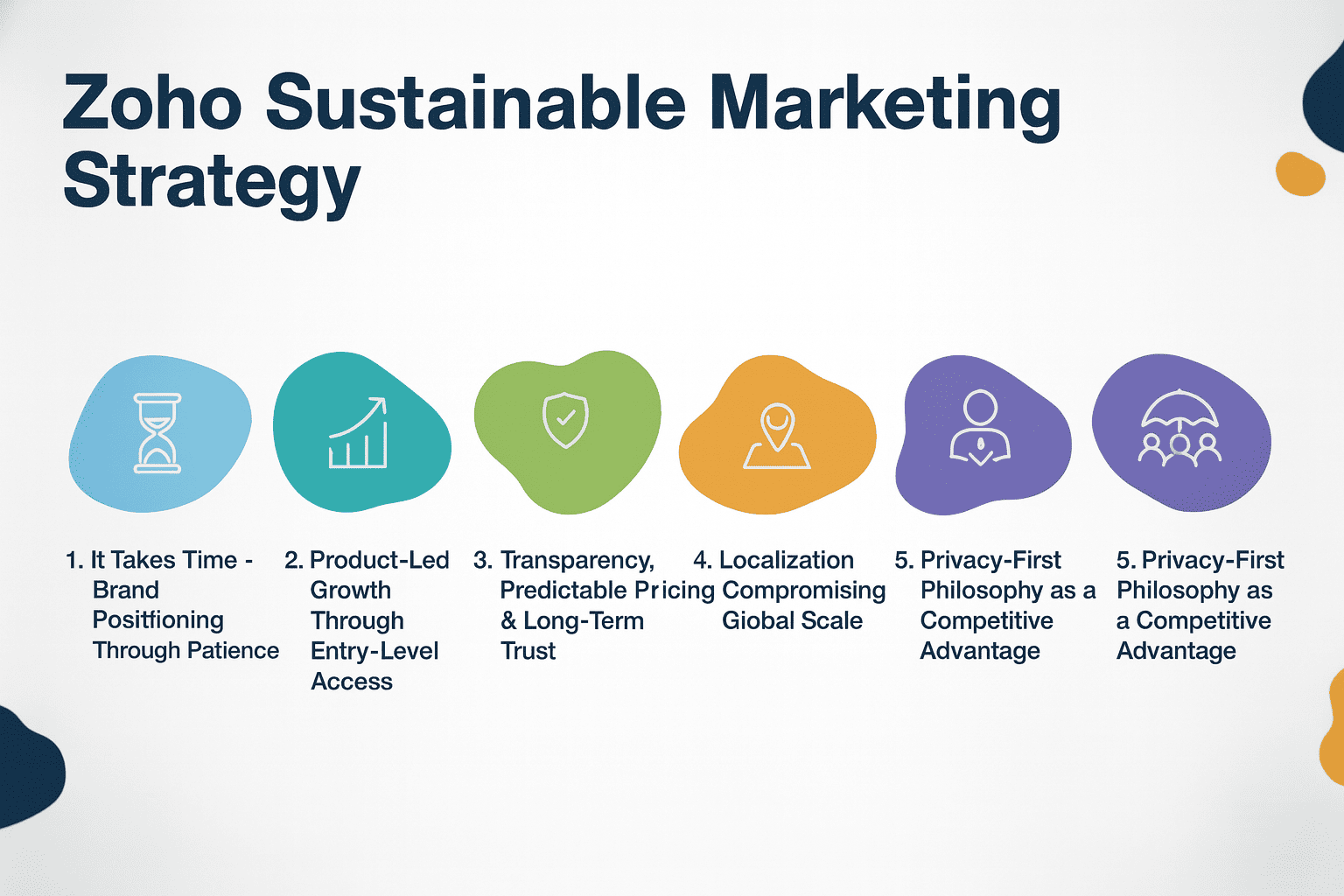
1. It Takes Time - Brand Positioning Through Patience
In an industry obsessed with speed, instant traction, and viral growth, Zoho deliberately chose a different narrative.
In mid-2025, Zoho launched the “It Takes Time” campaign to highlight its 30-year journey of steady, sustainable growth. The campaign emphasized patience, trust, and long-term thinking rather than quick wins.
The creative direction relied on strong visual metaphors, such as the banyan tree, symbolizing deep roots, resilience, and longevity. Importantly, the campaign was not limited to a single channel. Zoho executed it across social media and print newspapers, reinforcing consistency and seriousness.
By owning “patience” as a brand value, Zoho differentiated itself from the typical tech narrative of disruption and speed. The message was clear: lasting businesses are built over time, not overnight.
Key takeaway: Strong positioning does not always mean being faster or louder. Sometimes, owning a contrasting value can set a brand apart in a crowded market.
2. Product-Led Growth Through Entry-Level Access
While many SaaS companies rely heavily on advertising to acquire users, Zoho follows a product-led growth model.
With over 50 applications spanning sales, finance, HR, marketing, and operations, Zoho lowers the barrier to entry through free plans and affordable starter tiers. Businesses can try the tools, experience real value, and adopt them organically.
Once a team integrates even a single Zoho app, upgrading or expanding into additional products becomes a natural progression. Zoho Commerce is a strong example. Instead of charging variable transaction-based fees like many e-commerce platforms, Zoho uses a flat-fee pricing model, making adoption simpler and less risky.
Each product acts as a gateway to a new user segment, reinforcing Zoho’s ecosystem strategy.
Key takeaway: Let customers experience value first. When the product delivers, conversion requires minimal persuasion.
3. Transparency, Predictable Pricing & Long-Term Trust
Pricing in SaaS is often a source of frustration—hidden costs, sudden price jumps, or complex usage-based models that make budgeting difficult.
Zoho built its reputation on the opposite approach: clarity and predictability.
Pricing is presented in simple tiers:
-
Free plans with defined limits
-
Paid plans with clearly stated features and costs
There are no surprise charges or confusing add-ons. Customers know exactly what they will pay month after month.
A key enabler of this approach is Zoho’s cost structure. The company spends three times more on research and development than on marketing. By prioritizing engineering over ad spend, Zoho keeps operational costs low and passes those savings on to customers.
Zoho One exemplifies this philosophy by offering access to the entire product suite at a flat per-employee price, making budgeting straightforward for businesses.
Key takeaway: Transparent pricing builds trust. Predictability turns customers into long-term partners rather than short-term users.
4. Localization Without Compromising Global Scale
Many global SaaS companies expand by pushing the same product across markets with minimal adaptation. Zoho chose a more thoughtful path.
Its products are available in 25+ languages, with strong adoption in India and increasing traction in other emerging markets. Localization goes beyond language—it includes understanding regional business needs, workflows, and expectations.
At the same time, Zoho maintains a strong global standard for data privacy and compliance.
5. Privacy-First Philosophy as a Competitive Advantage
In an era where many SaaS platforms monetize user data or run in-app advertising, Zoho has taken a firm stand.
Zoho:
-
Does not sell customer data
-
Does not run ads within its products
-
Maintains strict compliance with global data protection regulations
This privacy-first approach strengthens trust, particularly for businesses that value data security and long-term reliability.
Key takeaway: Ethical practices and customer trust can be powerful differentiators—especially in markets fatigued by data exploitation.
Key Takeaways from Zoho’s Marketing
(screenshot this)
-
Invest in depth, not noise: Building something valuable and reliable creates loyalty that outlasts short-term campaigns.
-
Keep pricing simple and predictable: Transparency removes friction and builds long-term trust with customers.
-
Let users experience value first: Free tiers or trials allow the product to prove itself, reducing the need for hard selling.
-
Turn customers into storytellers: Real experiences and communities drive more trust than paid endorsements.
-
Stand for values beyond profit: Clear principles, like ethics, privacy, or sustainability, can become a powerful brand differentiator.
Tagged with:

Latest Posts
Login to comment
To post a comment, you must be logged in. Please login. Login
Comments (0)