How to Turn AI into a Referral-Generating Machine
Organic referrals — when a happy customer tells someone else about your product — are one of the most powerful and cost-effective sources of growth. These personal recommendations carry trust no paid ad can buy, yet most companies still treat referrals as a hopeful afterthought rather than a repeatable strategy.
Artificial intelligence changes that. Modern AI tools can help you identify likely referrers, understand what motivates them, and trigger referral requests at the right moments — turning random word-of-mouth into a systematic growth engine.
Below is a practical, easy-to-follow 30-minute framework to begin using AI to bring in new referrals for your business.
Why Referrals Matter — and What’s Broken Today
Most brands wait for referrals to happen naturally or rely on generic “Refer a Friend!” buttons. But that approach rarely works. Without insight into who’s likely to refer and when, referrals remain sporadic and unpredictable.
AI lets you engineer referrals by helping you:
-
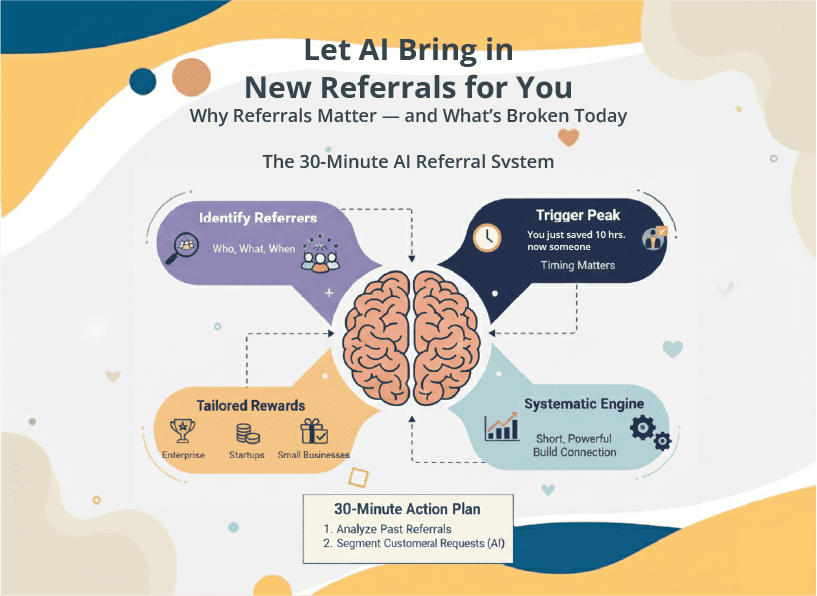
Identify customers who are most likely to refer
-
Personalize incentives based on what motivates each group
-
Trigger referral requests at moments of peak satisfaction
-
Optimize messaging for different customer relationships
This turns referrals from a passive hope into a predictable growth channel.
The 30-Minute AI Referral System
Step 1 — Assess Your Referral Intelligence
Start by looking at your existing customers and past referrals. Ask:
-
Who referred others on their own?
-
What did they have in common (usage patterns, team size, success moments)?
-
When did they refer others (timing after onboarding, milestone achievements)?
This assessment reveals patterns that show who your natural advocates are and when they are most likely to refer. For example, in one SaaS case study, customers who used the product for 60+ days and reached major success milestones referred the most.
Goal: Understand your highest-potential referrers, their behaviors, and the moments they feel most positive about your product.
Step 2 — Build an AI-Powered Referral Strategy
Here are three practical AI prompts to help you build a referral engine:
1. Predict Who Will Refer
Ask AI to score your customers on likelihood to refer based on:
-
Product usage and satisfaction signals
-
Engagement level and influence within their network
-
Past behavior patterns
Have AI differentiate between quantity referrers (many but weak leads) and quality referrers (fewer but highly valuable referrals). With this data, you can focus on the 20% of customers who offer 80% of referral potential.
2. Personalize Referral Incentives
Generic referral incentives often attract low-quality leads. Instead, use AI to create segment-specific rewards tailored to what each customer group truly values:
-
Enterprise customers: public acknowledgment and early feature access
-
Startups: tiered rewards that grow with each referral
-
Small businesses: free service months or premium add-ons
This ensures your incentives feel like genuine value, not pushy marketing.
3. Trigger Referrals at Peak Moments
Timing matters more than incentive size. Use AI to identify exact moments when customers feel most satisfied — for example:
-
After completing a key task
-
Hitting success milestones
-
Receiving excellent customer support
Then trigger referral requests that tie into their achievement, such as:
“You just saved your team 10 hours this week. Know someone who could benefit from that too?”
Step 3 — Implement Gradually
You don’t need perfect automation at once. Start with your highest-propensity referrers and launch personalized messages. Once that’s live:
-
Add incentive customization
-
Trigger requests at key moments
-
Build a more automated engine over time
This phased approach helps you launch quickly and learn as you go.
Tools to Bring This to Life
Here are categories of tools that support each stage:
Referral Systems
-
ReferralCandy
-
Viral Loops
-
Friendbuy
-
Rewardful
Customer Intelligence
-
Gainsight (health scoring)
-
ChurnZero (usage insights)
-
Totango (engagement tracking)
AI Strategy & Prompting
-
ChatGPT, Claude, Gemini for prompt-driven system design
These tools help you turn AI insights into real referral workflows.
The Big Idea
Most marketers assume referral growth needs better incentives. AI shows that timing, targeting, and context matter far more. Your top referrers don’t need big cash rewards — they need the right moment, the right message, and the feeling that they’re helping their network.
By combining customer behavior insights with AI-powered messaging and triggers, you can transform referrals into a predictable growth engine — not just a nice-to-have feature.
Your 30-Minute Action Plan
-
Analyze your recent referrals and spot patterns
-
Segment customers by referral likelihood
-
Run three AI referral prompts (propensity, incentives, timing)
-
Identify your top 50 referral candidates
-
Send one context-based referral request to your best users this week
Tagged with:

Latest Posts
Login to comment
To post a comment, you must be logged in. Please login. Login
Comments (0)