
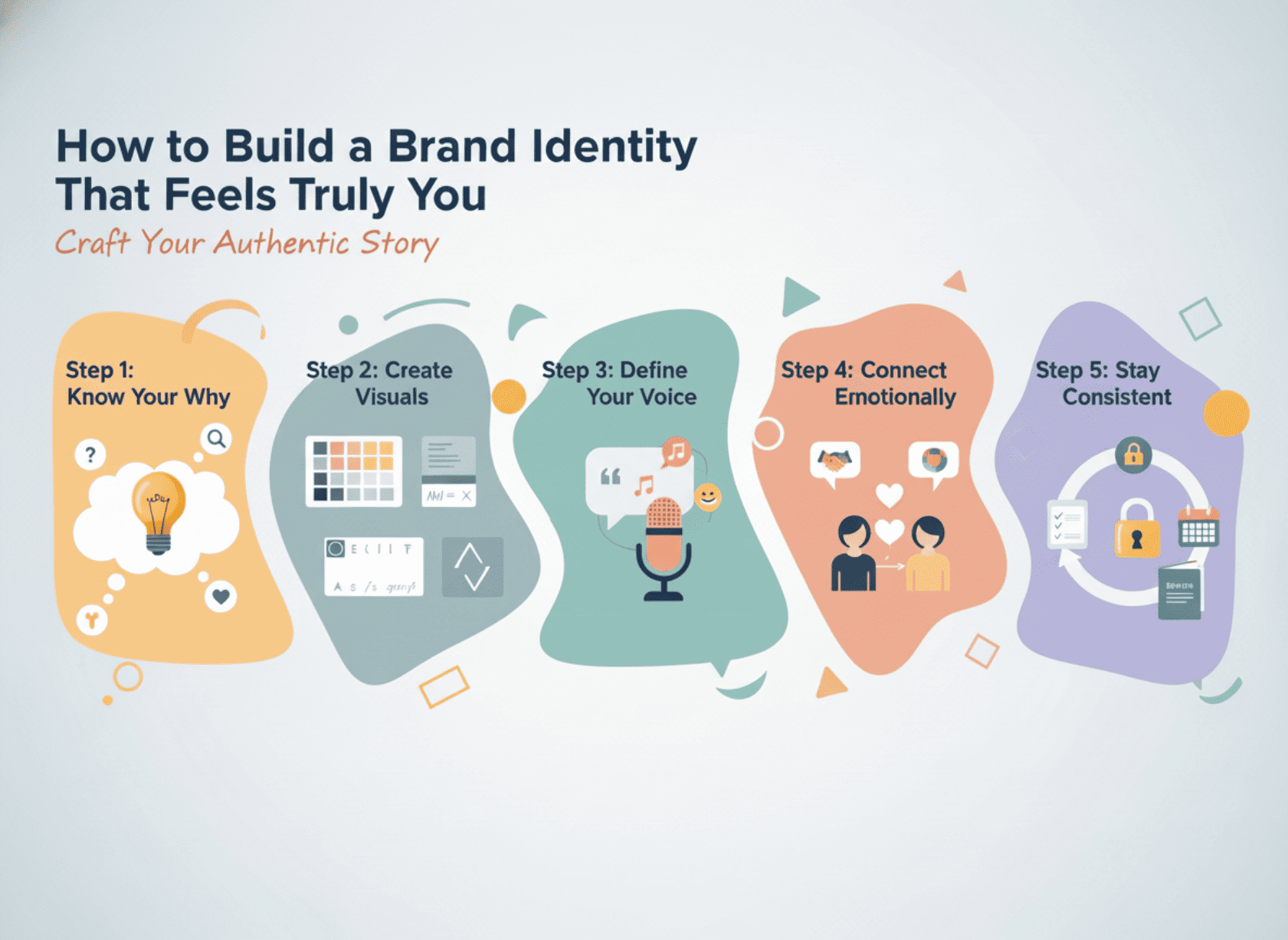
💡 Step 1: Know Who You Are (and What You Stand For)
Before you choose colors or design a logo, you need clarity on your purpose and values.
Ask yourself:
-
Why did I start this business?
-
What problems do I solve for my customers?
-
What do I want people to feel when they think of my brand?
👉 Example:
If you’re a fitness coach, are you about discipline and performance or balance and wellness?
Your answer will shape your tone, visuals, and communication style.
Pro Tip: Write a short “brand statement” — one or two lines that define your purpose and personality.
Step 2: Create Visuals That Reflect Your Personality
Your logo, color palette, and fonts are the face of your brand — they communicate before you even say a word.
Each color and design choice tells a story.
-
Bold colors = confidence, energy, excitement
-
Soft tones = calmness, trust, warmth
-
Clean minimal design = professionalism and focus
👉 Don’t chase trends — choose visuals that represent your true vibe.
Pro Tip:
If your business feels warm and personal, choose friendly fonts and earthy tones.
If it’s modern and tech-driven, go for sharp lines and cool shades.
Step 3: Define Your Voice and Tone
Your brand’s voice is how you “sound” to your audience — in captions, emails, videos, and ads.
Ask yourself:
-
Do I want to sound formal or conversational?
-
Am I more motivational, educational, or entertaining?
-
How would I talk if my brand were a person?
👉 Example:
A café might use a cozy, friendly tone (“Grab your coffee and cozy up with us ☕”),
while a tech startup might sound confident and sleek (“Empowering your business with smarter solutions”).
Pro Tip: Keep your tone consistent everywhere — your Instagram bio, website copy, and even your packaging.
Step 4: Connect Emotionally with Your Audience
A strong brand identity is one people feel connected to.
Share stories, not just products.
Show your human side — your process, your challenges, your values.
People don’t fall in love with logos; they fall in love with the people and purpose behind them.
👉 Example:
Share a short story about how your idea started, or what motivates you to keep going. That’s what makes your brand authentic.
Step 5: Stay Consistent
Consistency builds trust.
If your tone, visuals, or messaging change too often, your audience gets confused.
Create a simple brand guide — one document that defines:
-
Your logo versions
-
Brand colors and fonts
-
Voice and tone
-
Key brand values and messaging
You don’t need a fancy manual — even a one-page Notion or Canva document works!
Final Thoughts
Building a brand identity that feels truly you isn’t about perfection — it’s about authenticity.
When your brand reflects your values, voice, and vision, it naturally attracts the right audience.
Remember:
“People don’t connect with perfect brands — they connect with real ones.”
So be real, be clear, and be consistent — that’s how you’ll stand out.
✍️ At Mindfusion Technologies, we’re passionate about helping young entrepreneurs build brands with purpose and clarity. Stay tuned for next week’s Mindfusion Insights blog — "How to transform customer feedback into actionable marketing insights.”
Tagged with:

Latest Posts

Login to comment
To post a comment, you must be logged in. Please login. Login
Comments (0)