
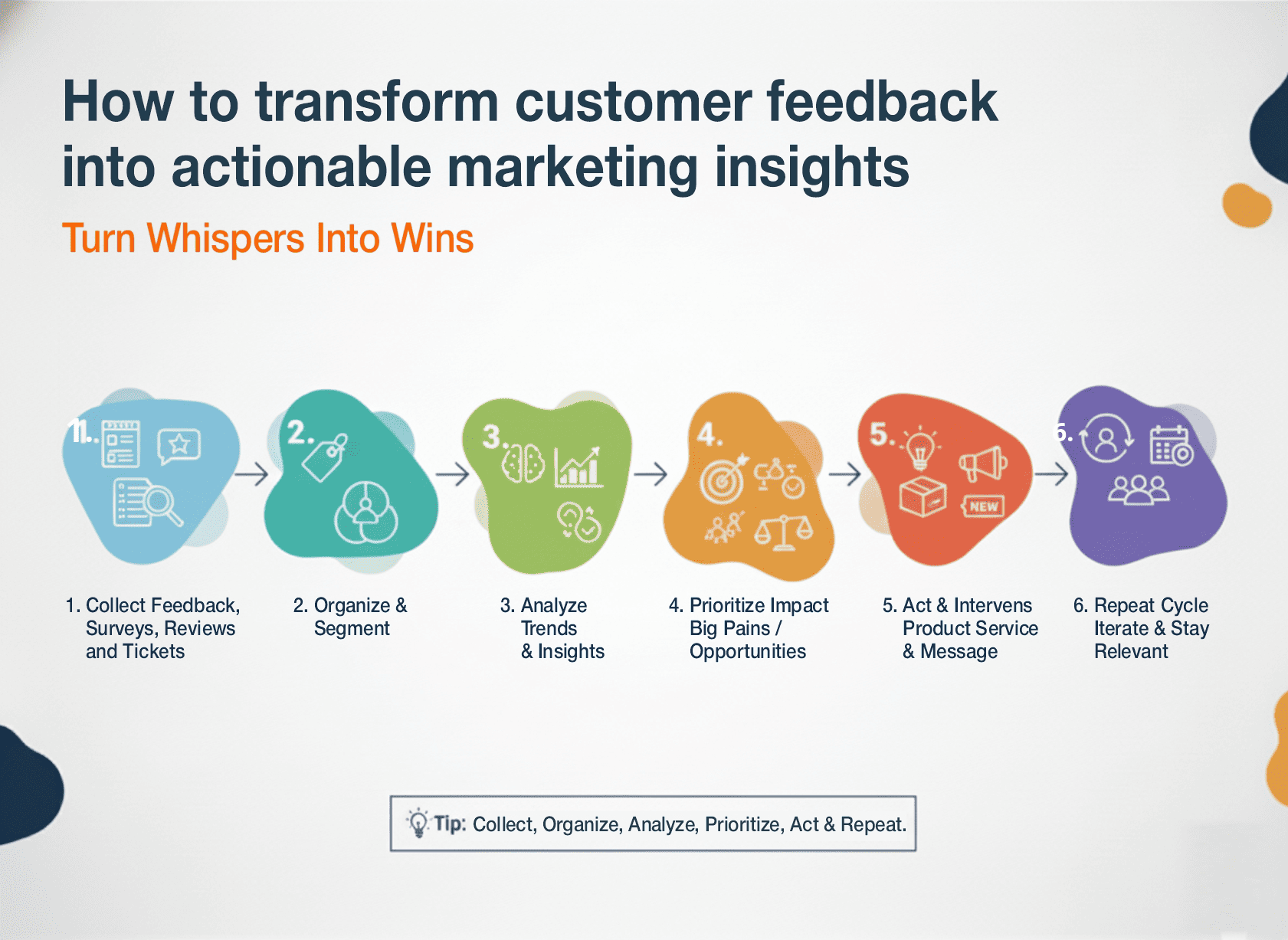
1. Collect Meaningful Feedback
Start by gathering feedback across all the places your customers interact with you.
-
Surveys, online reviews, focus groups, support tickets — they all count.
-
But don’t just collect data — capture it systematically, so you can spot patterns and themes.
-
Tip: Pull in feedback from unexpected places too (employees who are also customers, partners, etc.).
Why it matters: Without meaningful, organized feedback, you’re flying blind.
2. Organize and Segment Your Data
Once you have feedback, don’t leave it as one big pile of comments. Break it down:
-
Group feedback into themes: product features, delivery experience, pricing, etc.
-
Segment by customer type: beginner vs advanced users; high budget vs cost-sensitive.
Why it matters: This lets you see what different groups of customers really care about — not just what everyone says.
3. Analyze Patterns to Uncover Trends
Now that the feedback is organized, dig into it:
-
Look for repeating words, phrases, themes.
-
Combine qualitative feedback (what people say) with quantitative data (conversion rates, churn, etc.).
-
Example case: A SaaS company found “more integrations” was a top request — but when they looked closer, the actual tools they wanted were Slack, Trello, Mailchimp (not the big names they assumed).
Why it matters: Insights hidden in the details help you make smarter decisions, not just guess.
4. Prioritize Based on Potential Impact
Not all feedback is equally valuable. So:
-
Focus first on issues that cause big pain or offer big opportunity (e.g., a confusing checkout process).
-
Don’t get distracted by loud but small problems — ensure the feedback represents a meaningful customer group.
Why it matters: Your time and resources are finite. Spend them where the payoff is biggest.
5. Transform Insights into Actionable Interventions
Now, make changes:
-
The product might need an update.
-
Your service delivery may require a tweak.
-
Your marketing might need a new message.
-
Example: One company turned feedback into a white-paper rather than just a testimonial — showing how their service solved real problems.
Why it matters: A good insight without action is wasted potential.
6. Repeat the Cycle — Feedback is Forever
Gathering feedback isn’t “one and done.”
-
After each change, go back and collect feedback again. See how customers responded.
-
Remember: “Customers” can include partners, employees, anyone with a stake in your brand experience.
Why it matters: Markets, customers, and expectations change. To stay relevant, you keep listening and iterating.
Final Thoughts
Turning customer feedback into growth may sound complex — but when you break it into these steps, it becomes manageable
By doing this, businesses like yours can create marketing strategies that are sharply tuned to your customer’s real needs — not just what you think they need.
At Mindfusion Technologies, we’re all about helping young entrepreneurs build smart, customer-centric brands.
Stay tuned for our next blog where we’ll dive into trending marketing case studies.
Tagged with:

Latest Posts
Login to comment
To post a comment, you must be logged in. Please login. Login
Comments (0)